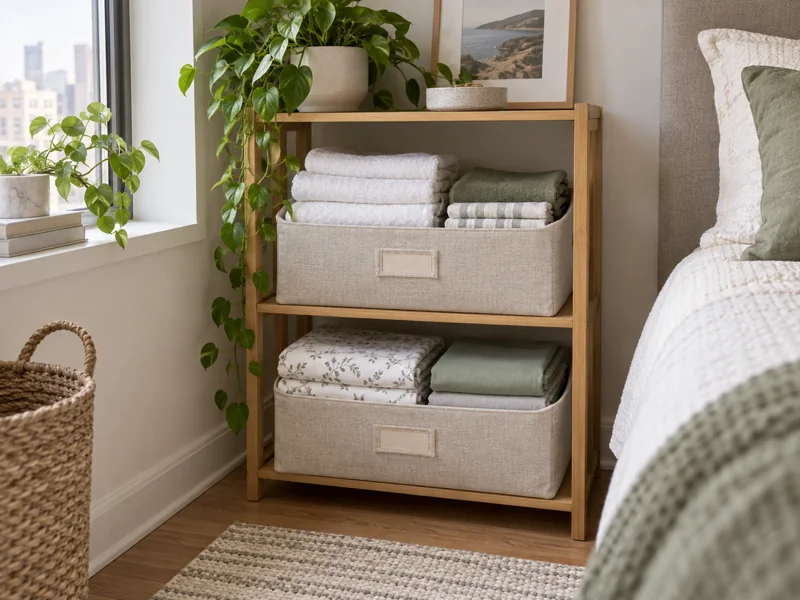
No linen closet does not mean towels and sheets must live in unstable towers behind a bedroom door. The useful question is not “Where can I hide them?” but “Where will I reach for them, and how many actually need a home?”
Start with the linens you use every week. Give those the easiest location. Seasonal or guest pieces can use less convenient space.
Count the real inventory first
Gather towels, sheets, pillowcases, and blankets from every room. Separate everyday sets from guest and seasonal pieces. Remove anything worn out, uncomfortable, or no longer fits the bed. Do not buy a cabinet to accommodate linens you no longer want to use.
There is no universal number of towels or sheet sets for every household. Laundry frequency, guests, and children change the need. Keep what your routine can realistically wash and store.
Store everyday towels near the bathroom
A narrow shelf, a small wall cabinet, or a basket on an existing sturdy shelf can work. Keep clean towels away from splash zones and damp floors. Leave enough space to remove one towel without pulling the whole pile down.
If your bathroom has almost no counter space, the tiny bathroom guide offers ways to use vertical space without crowding the sink.
Give spare sheets a bedroom home
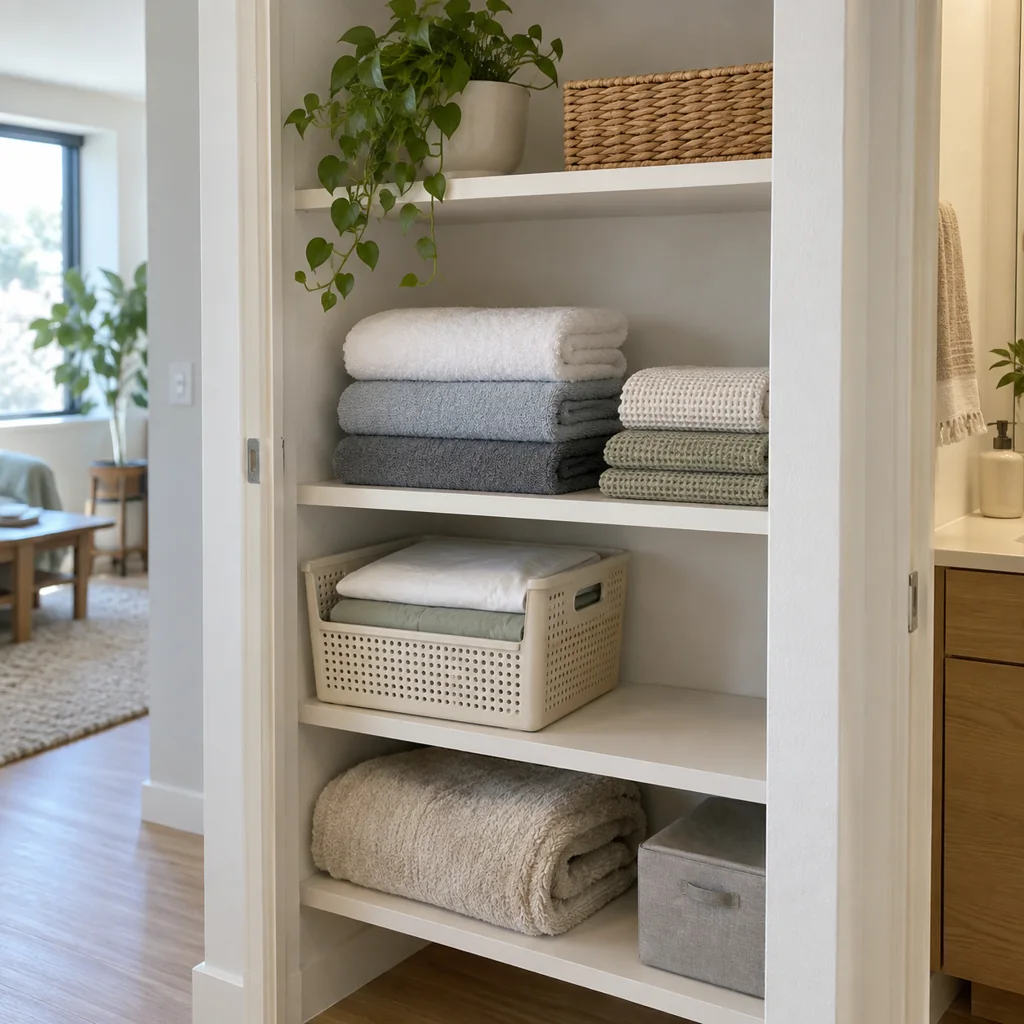
Place each clean, fully dry sheet set together. Folding the flat sheet and fitted sheet into one pillowcase keeps the set identifiable without a complicated label system. A bedroom shelf, a dresser drawer, or a low-profile under-bed bin can work if access is comfortable.
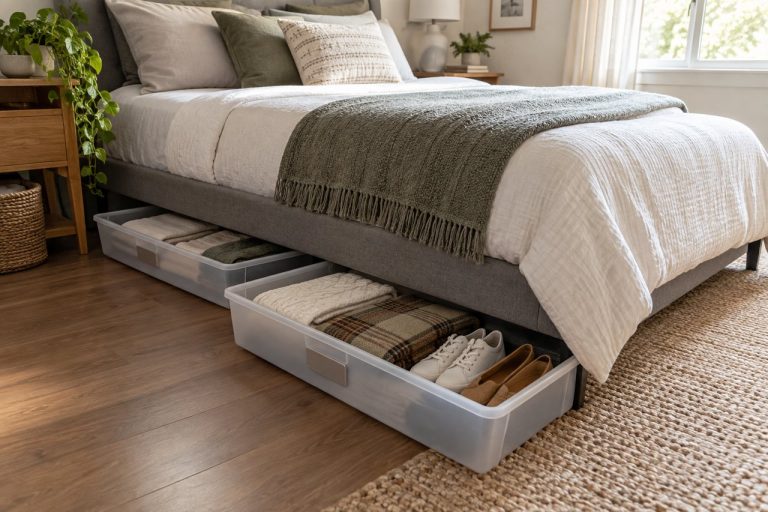
Our under-bed storage guide explains when that location is useful and what should stay elsewhere.
Use a shelf that fits the space, not the catalog photo
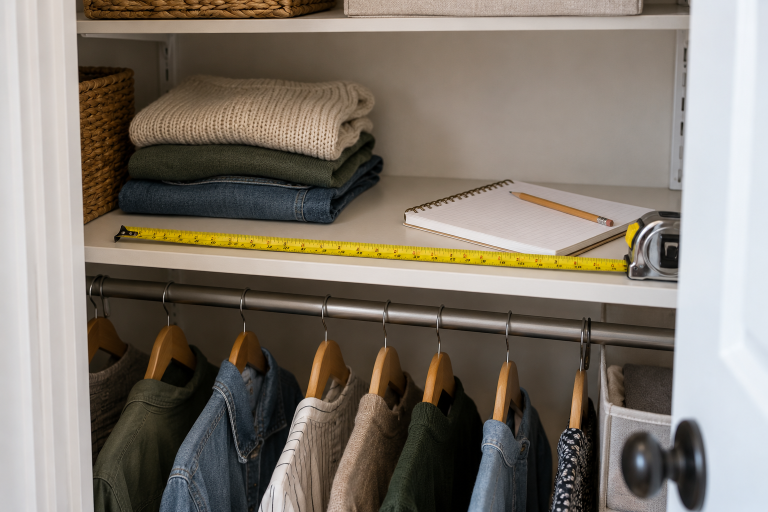
Measure the available width, depth, and clearance before buying anything. A shallow unit that holds two neat stacks is more useful than a deep unit where the back row disappears. Check the furniture’s load rating, keep heavier items lower, and anchor freestanding furniture where appropriate.
Open shelves make frequent items visible, but they collect dust. Closed bins protect occasional linens better, though they add one step to retrieval. Choose based on how often the contents are used.
A simple placement map
| Item | Best first location | Why |
|---|---|---|
| Daily bath towels | Near the bathroom | Quick access after bathing |
| Current spare sheet set | Bedroom drawer or shelf | Easy bed changes |
| Guest linens | Closed bin on an upper or under-bed shelf | Less frequent access |
| Seasonal blankets | Dry protected storage | Out of daily circulation |
Prevent the new storage spot from becoming a pile
Assign one category per shelf or container. Fold to a consistent size so the stack remains stable. Store only clean, fully dry fabric. Leave a small gap for airflow and easy removal; overfilling a bin makes the whole system harder to maintain.
When laundry is the bottleneck rather than storage, use a laundry routine that prevents piles. Storage cannot compensate for an unfinished wash cycle indefinitely.
Try this before buying anything
- Remove unusable or duplicate linens.
- Measure one available shelf or drawer.
- Place everyday pieces closest to where they are used.
- Group less-used items in one dry, protected location.
- Live with the setup for two laundry cycles.
- Buy a container only if a specific gap remains.
This approach follows the principle in our small-kitchen organizing guide: make the inventory fit the home before adding more equipment.
Quick questions
Can towels be stored in the bathroom?
Yes, if the spot stays dry, clean, and away from direct splashes. In a consistently damp bathroom, a nearby bedroom or hallway may be better.
Are vacuum bags useful?
They can compress some compatible seasonal textiles, but may crease or compress certain fillings. Follow the fabric and bag maker’s guidance and never seal damp items.
You Might Also Love

How to Organize a Shared Desk in a Small Home
How to Measure a Closet Before Buying Organizers
Under-Bed Storage: What Belongs There and What Does Not
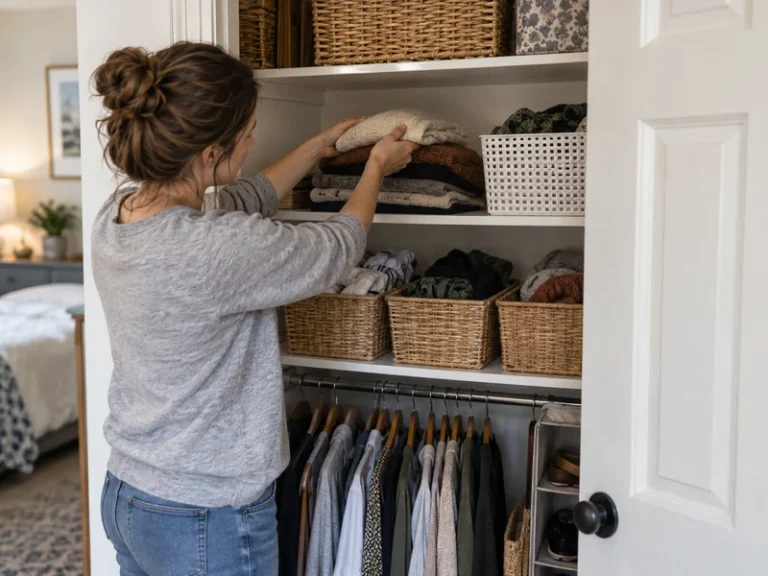
How to Declutter a Closet Without Emptying Everything at Once

How to Keep Pipes From Freezing: 7 Checks Before a Cold Snap
via Yesil Rehber