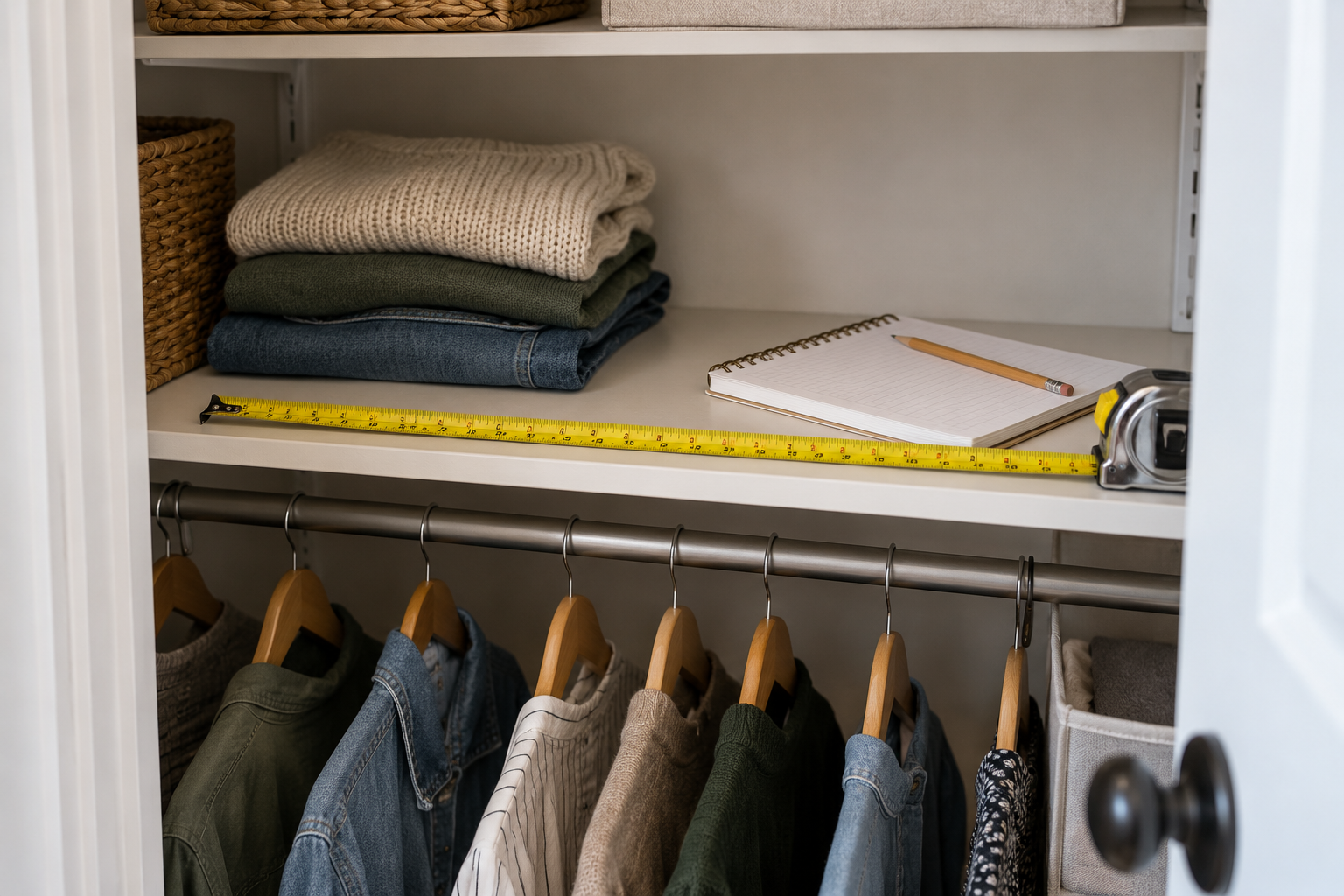
A closet organizer can fit the online product photo and fail the moment you try to close the door. The usual problem is not a bad organizer; it is measuring the wrong space. Shelf width is only one number. Trim, hinges, a hanging rod, and the room needed to reach the contents all affect whether a system earns its footprint.
This guide gives you a ten-minute measuring walk-through and a copyable fit card. It does not assume that buying bins is the first step. If the closet already works better after you remove what does not belong there, stop before shopping.
Start with the use, not the product
Choose one friction point: shoes pile at the bottom, folded sweaters fall over, or a narrow shelf hides spare bedding. Name the items that need a home and how often you reach for them. Daily-use items need a reachable opening; rarely used items can tolerate a higher shelf.
If the closet is overfilled, try our section-by-section closet edit first. Measuring a space that is still crammed with things you will not keep can lead to buying the wrong solution.
Take six measurements in ten minutes
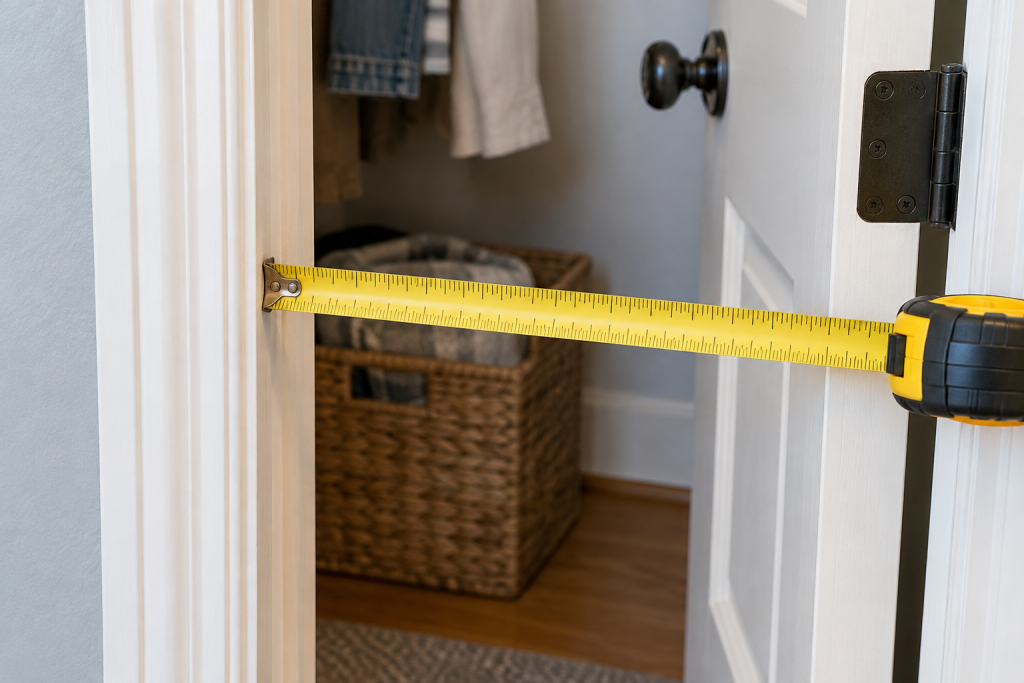
Use a rigid or locking tape measure, a notebook, and the closet door in its normal open position. Record in the same unit used by the product listing. Measure at more than one point in an older or uneven space; use the smallest usable dimension.
- Opening width: the clear space between trim or door edges where an organizer must pass through.
- Interior width: the shelf or floor width at the front and back. A unit that fits the back may not pass the narrower opening.
- Usable depth: from the back wall to the first obstruction. Check whether a closed door, handle, or hanging garment reduces it.
- Vertical clearance: from the shelf to the next shelf or rod, or from the floor to hanging clothes. Measure with the clothes in place.
- Access clearance: the space needed to pull a drawer, tilt a bin, or open a lid while standing where you normally stand.
- Door sweep and hardware: note where the door, hinges, track, or frame intrudes as it moves.
Do not treat a nominal “12-inch shelf” as exactly 12 usable inches. Measure the real opening, then compare it with the product’s outer dimensions, not its advertised storage capacity. Follow any assembly and clearance instructions from the manufacturer.
The fit card to copy into your phone
| Question | Your measurement or answer |
|---|---|
| What items will live here, and how often are they used? | ______ |
| Narrowest opening width | ______ |
| Smallest interior width and usable depth | ______ / ______ |
| Vertical clearance under shelf or clothes | ______ |
| Space needed to pull out or open contents | ______ |
| Door, hinge, rod, baseboard, or outlet obstruction | ______ |
| Rental or wall-mounting restriction | ______ |
Keep a quick photo of the empty opening beside the card. It helps you remember where the awkward hinge or baseboard sits, but the photo does not replace a measurement.
Test a product on paper before buying it
Compare the assembled outside dimensions with your smallest usable width, depth, and height. Then test the movement: can the lid open or drawer pull out, and can the door still close? If the listing gives only interior capacity or a marketing size, request the outside dimensions or choose a better-documented option.
Here is an illustrative fit failure. A closet has a 30-inch interior shelf, but the clear doorway is 28 inches after trim. A rigid 29-inch-wide organizer might fit on the shelf in theory but cannot pass through the opening when assembled. A narrower unit, a design assembled inside the closet (if its instructions permit that), or no organizer at all may be better. These numbers are an example, not measurements of a tested product.
For stackable bins, also check the manufacturer’s load and stacking directions. Heavy items belong low; do not put a tall, unstable stack where it can tip into a walkway or onto a child. Our researched bin comparison explains how access style changes the space a bin needs.
Choose the least complicated fix
- If visibility is the problem: group like items and use a shallow, open container you already own before buying a new set.
- If reach is the problem: bring frequently used items to a comfortable height; a larger storage tower may make access worse.
- If the door is the problem: measure its clearance with the proposed organizer’s full depth and hardware. An over-door product may interfere with the latch or frame.
- If weight is the problem: check shelf construction and product load limits. Do not assume a thin wire shelf or rental wall can support heavy bins.
- If folded items keep collapsing: try fewer, wider stacks or a simple divider only if it fits the access space.
A useful organizer makes one task easier without creating a new one. If you have to unload three boxes to reach the sweater worn every week, the footprint is not earning its place.
Try a no-buy mock-up
Mark the proposed footprint with painter’s tape or a folded piece of paper, following the surface maker’s guidance so the finish is not damaged. Open and close the door. Reach for the items you use most. If possible, place an existing box of similar dimensions in the spot for a day. This is a fit rehearsal, not a claim that the eventual product will perform identically.
For a different hard-to-use zone, our under-bed storage guide uses the same principle: measure the opening and retrieval path, not just the empty volume.
Quick questions
Should I measure in inches or centimeters?
Either works. Use one unit consistently and convert only when a product listing forces you to. Write the unit next to every number so a 30-inch width does not become a 30-centimeter shopping mistake.
How much extra room should I leave?
There is no universal allowance. Leave enough for the actual door, hardware, ventilation if specified, and the motion needed to use the organizer. Follow the product’s installation instructions rather than a generic gap rule.
What if a product page has no outside dimensions?
Ask the seller or manufacturer. If the answer remains unclear, skip it. A return is more work than a second measurement.
You Might Also Love
How to Organize a Shared Desk in a Small Home
Where to Store Towels and Sheets When You Have No Linen Closet
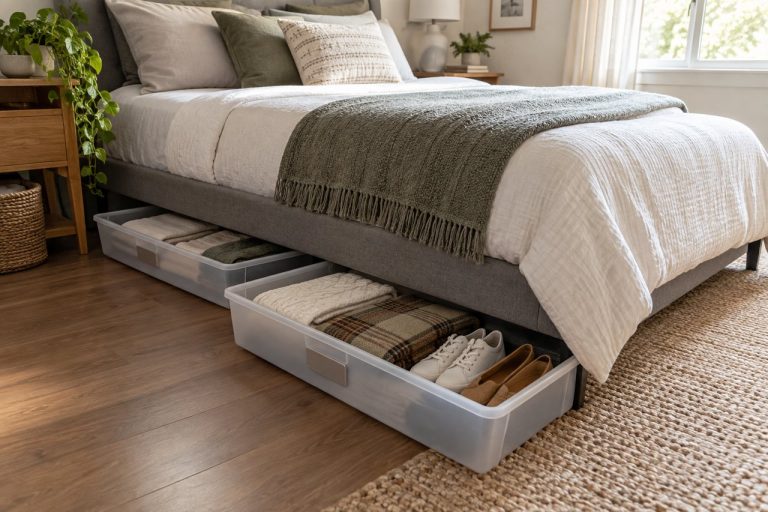
Under-Bed Storage: What Belongs There and What Does Not
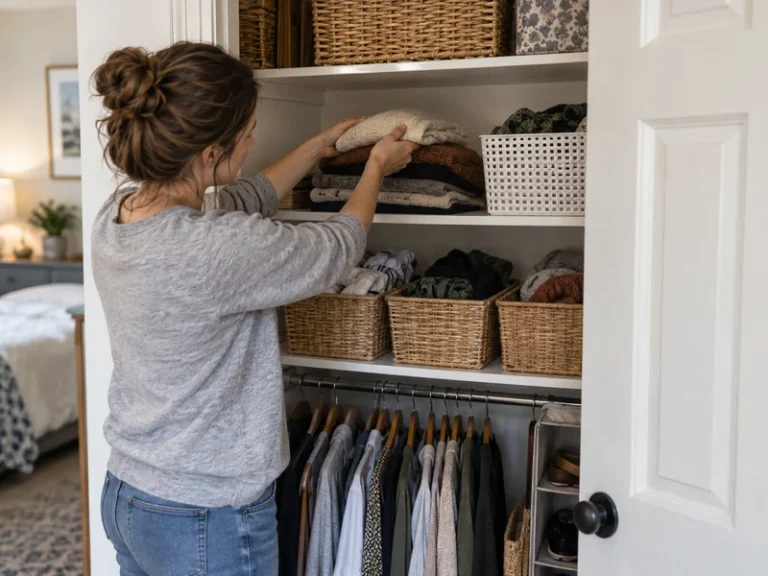
How to Declutter a Closet Without Emptying Everything at Once

How to Keep Pipes From Freezing: 7 Checks Before a Cold Snap
via Yesil Rehber